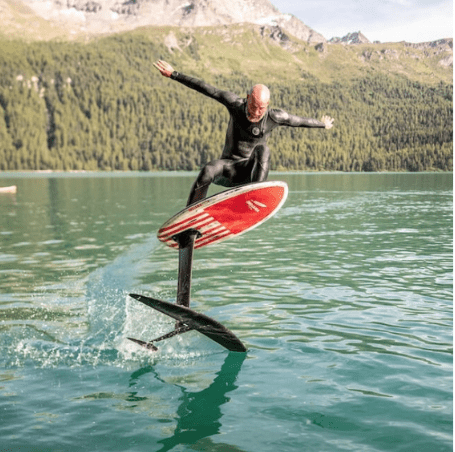
How to choose your wing foil equipment
Choosing the right wing foil kit isn't easy, as there are many parameters to take into account, and we'll try to help here.
The Wings
Wing Surfers, or simply Wings, are designed to help you maintain movement and gain speed while gliding over the surface of the water on your foil board.

Which size to choose ?
Wings are measured by surface area in square meters, and are available in a range of sizes from 2.5 m² to 7 m². With the constant evolution of technology, these now also come in a variety of shapes and constructions, designed to make up for the shortcomings of their previous versions. When choosing the size of your wing, you'll need to take into account the weather conditions in which you intend to surf.
The size of the wing depends on your weight, the wind and the type of foil used.
As regards weight in general :
> 60 kg => 3m2 wing
> 70 kg => 4m2 wing
> 80 kg => 5m2 wing
> 90 kg => 6m2 wing
As far as the wind is concerned, we advise you to start wingfoiling slightly over-canopied, as it's not easy at low speeds. Starting wingfoil under canvas is certainly less intimidating, but much more technical.
Concerning wing size and wind range:
2m2 => 25-45 knots
3m2 => 20-40 knots
4m2 => 15-30 knots
5m2 => 10-25 knots
6m2 => 8-20 knots
7m2 => 8-20 knots
As far as the foil is concerned, the bigger the front wing of your foil, the less you'll need a big wing to take off, and the less you'll be able to hold it in a strong wind. And vice versa.
We recommend that you always check the manufacturer's recommendations, as they are a general suggestion, and although fairly precise, small margins can make all the difference.
What type of Wing ?
-

-
 -31%New
 -

-

-
 New
New -
 New
New -
 New
New -
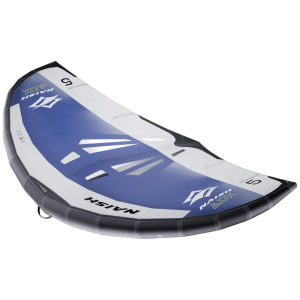

There are three main types of wings: those with multiple handles (Naish, Ensis Score, Sic, Ozone), those with a boom (Duotone Slick, Ensis Top Spin) and those with two rigid handles (Ensis Score II, North, Doutone Unit V2).
- Handles : Wing foils with handles are the most common on the market. They generally consist of an inflatable structure and handles at each end. The handles offer excellent control and enable the rider to steer the kite with precision. This facilitates maneuvers, direction changes and power control. Wings with handles are ideal for riders of all levels, offering versatility to suit different riding styles.
- wishbone : Wing foils with booms are another popular option. The boom is a structure that attaches to the wing and allows the rider to hold and control the wing. This configuration offers a feel more akin to windsurfing or kitesurfing, providing increased stability and an even distribution of power throughout the kite. Boom kites are often favored by experienced riders or those with previous windsurfing or kitesurfing experience
- two rigid handles : Wing foils with two rigid handles are a more recent option on the market. Unlike the soft handles of traditional wings, these wings are equipped with two rigid handles. This configuration offers a more direct feel and even more precise control of the wing. Two rigid handles are often preferred by riders looking for maximum performance and responsiveness in advanced maneuvers.
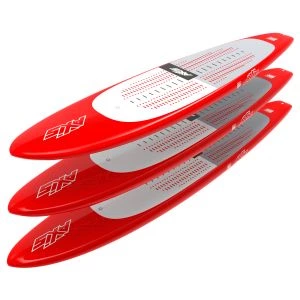
How to choose your Wing Foil board.
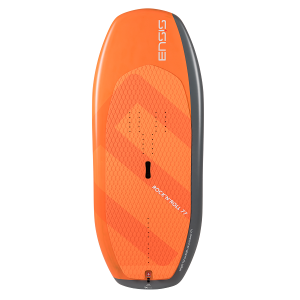
Before you buy your first WingFoil board, you need to know that there are 2 main trends. Freestyle/surf, which is aimed at experienced riders, and freeride. We'll be focusing on freeride, which is more common and can be ridden by riders of all abilities.
The choice of board is crucial: too small and you won't have enough stability to get started, too big and you'll have trouble getting out of the water and maneuvering.
Volume :

The board's volume varies according to its use, whether in strong or light winds, but above all according to the rider's weight and level.
Beginner: rider weight + 40L
Intermediate: rider weight + 10L
Advanced: rider weight -15L
Shape :
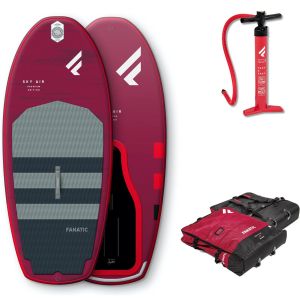
The shorter the board, the more responsive it is. In WingFoil practice, boards have become shorter and wider + thicker, allowing sufficient volume to be maintained.
As for the shape of the bottom, some would argue that little rocker (a very flat surface) allows for better acceleration and early planing. In our experience, a more or less subtle concave helps with start-up and sometimes avoids planting when making mistakes.
Straps/strapless :
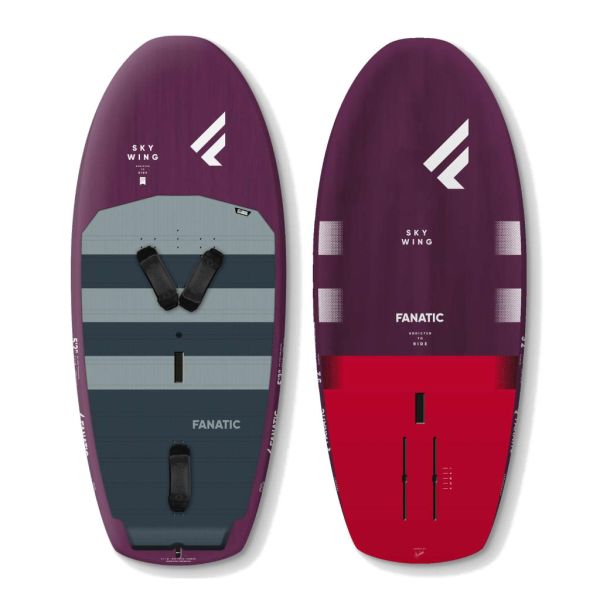
Wingfoil boards can be supplied with or without straps. Straps allow you to sail with more commitment and to jump. But don't panic: strapless boards are great for freeriding, especially for beginners, as they make it easy to eject in the event of a crash.H
How to choose your Foil
In WingFoil, the choice of kite is very important, depending on level, wind speed and sailing style.
The larger the wing's surface area, the greater its lift. Stable and forgiving, it's easy to get off the ground. However, its maximum speed will be reduced.
On the other hand, small-surface wings are faster and more maneuverable. But take-off requires more energy.
The beginner will obtain a wing surface area of around 2000cm2.
Beyond surface area, the shape of the foil is just as important: "aspect ratio".
The aspect ratio of a foil is a mathematical relationship that defines its shape. It's the ratio between the wing span (the distance between the two wingtips) and the chord (the distance between the leading and trailing edges).
From Low to High via MidAspect, there are many different shapes. This influences the foil's behavior. Glide, maneuverability, stability.
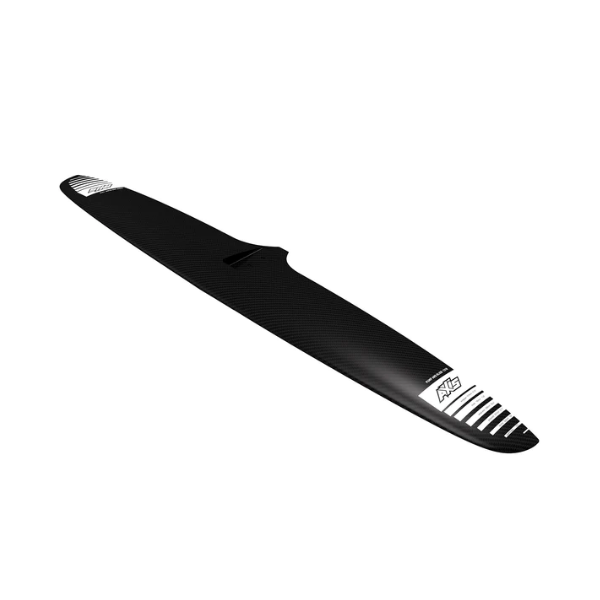
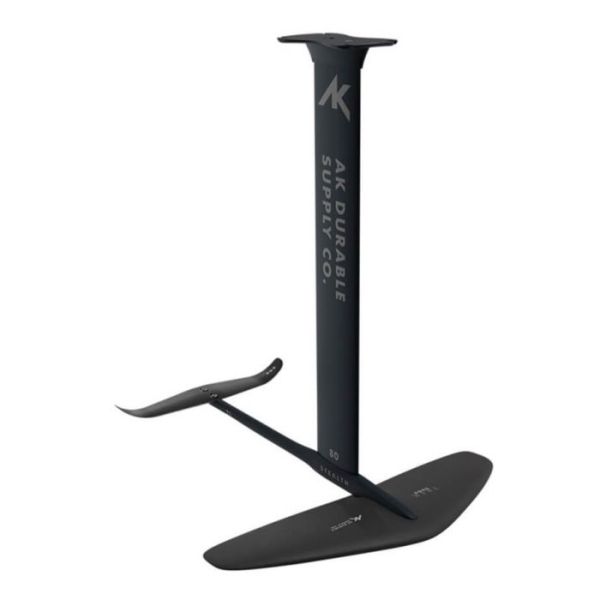
In this discipline, the rider will prefer a wing with a rather high aspect ratio, a HighAspect wing. Since the aim is to fly as long as possible, the wing's surface area is also fairly high. But not too much! You need to find a good compromise between lift and maximum speed. A wing that's too slow will require too much energy to move forward and accelerate. There are dedicated pump kites, with surface areas generally between 1600 and 2200cm2.
Once again, the choice is a very personal one, whether to pivot the manoeuvrability and make tight turns, or to fly effortlessly and gain in stability.
-

-
 -20%
-20% -
 -20%
-20% -

-
 -20%
-20% -

-

-
 -25%New
 -
 -12%Complete Wing Foil Set - Duotone Sky Free 5'5 + Aero High Aspect AL 3.0 foil- 2000 + Wing Duotone Unit-5.5Special Price CHF 3,599.00 CHF 4,086.00
 -
 New
New -
 -15%
-15% -

-
 -20%
-20% -
 -21%
-21% -